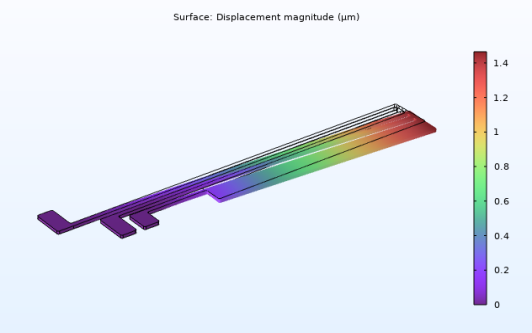
A less traditional application of mechanical design for a MEMS device is shown in Figure 3. The microactuator is subjected to controlled thermal expansion by the application of a current through parts of the structure, which induces Joule heating. The thermal expansion then causes the actuator to deflect and the simulation predicts the deflection as a function of the operating conditions. The simulation also reveals the limitations of the design, because the device will not work properly if the legs of the actuator make contact along the free faces.
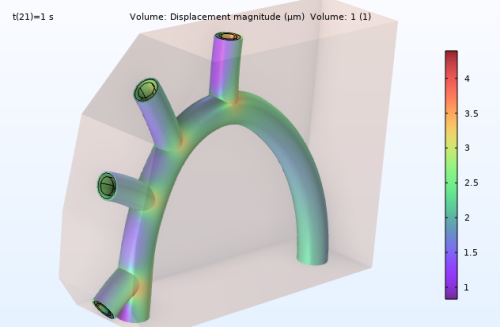
Structural analysis is also important outside of traditional structural engineering, for example in the field of biomechanics. Figure 4 shows the results of a simulation of part of the vascular system in a young child. The purpose of the simulation is to study what happens when surgery is performed on a child with a malformed aorta. The aorta and its ramified blood vessels are embedded in biological tissue. Pressure from the moving fluid is applied as a face load in the structural analysis. The Structural Mechanics Module includes several types of couplings for fluid–structure interaction.