
|
|
|
 |
|
G12
|
|
|
•
|
|
•
|
|
•
|
|
•
|
|
•
|
Modeling a composite laminate as a layered shell requires a surface geometry, in general referred to as a base surface, and a Layered Material node which adds an extra dimension (1D) to the base surface geometry in the surface normal direction. You can use the Layered Material functionality to model several layers stacked on top of each other having different thicknesses, material properties, and fiber orientations. You can optionally specify the interface materials between the layers, and control the number of through-thickness mesh elements for each layer.
|
|
•
|
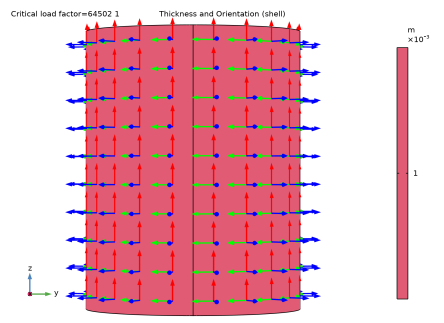
The third direction for the selected coordinate system in the Single Layer Material, Layered Material Link, or Layered Material Stack represents the normal direction of the Layered Shell or Shell physics. This is also the direction in which the layer stacking is interpreted from bottom to top, and therefore, it is crucial to know it during modeling. There are two ways to achieve this:
|
|
-
|
Using physics symbols: Go to the physics settings, find the Physics Symbols section, and select the Enable physics symbols checkbox. Then go to the material feature, for instance, Linear Elastic Material, to see the normal direction represented by green arrows in the geometry.
|
|
-
|
Using result templates: When a solution dataset is available, use the result template Thickness and Orientation to plot the normal direction.
|
|
•
|
From a constitutive model point of view, you can either use the Layerwise (LW) theory based Layered Shell interface, or the Equivalent Single Layer (ESL) theory based Linear Elastic Material, Layered node in the Shell interface. The laminated composite presented in the current model is modeled using a Linear Elastic Material, Layered node in the Shell interface.
|
|
•
|
The built-in Composites material library contains data for fiber and matrix constituents as well as for unidirectional and bidirectional laminae.
|
|
•
|
In order to perform a buckling analysis, a special Linear Buckling study is used. This consists of a Stationary study step and a Linear Buckling study step. The stationary study step performs the stress analysis for the applied load whereas buckling study uses eigenvalue solver and computes the critical load factors for the applied load.
|
|
•
|
In order to run the analysis for various layered materials and compare the results, all the layered materials can be defined using a Switch node in Global Materials. This Switch node can be selected in the Layered Material Link node and a Material Sweep node is added in the study. Note that while performing material sweep over layered materials in a pres-stressed buckling analysis, prestress stationary study step results are stored only for the last layered material.
|
|
1
|
|
2
|
|
3
|
Click Add.
|
|
4
|
Click
 Study. Study. |
|
5
|
|
6
|
Click
 Done. Done. |
|
1
|
|
2
|
|
1
|
In the Model Builder window, under Component 1 (comp1) right-click Definitions and choose Variables.
|
|
2
|
|
1
|
|
2
|
|
3
|
|
4
|
|
5
|
|
6
|
Click
 Build Selected. Build Selected. |
|
1
|
|
2
|
Browse to the model’s Application Libraries folder and double-click the file composite_cylinder_buckling_material.mph.
|
|
3
|
Click
 Done. Done. |
|
1
|
|
2
|
Go to the Add Material window.
|
|
3
|
|
4
|
Click the Add to Global Materials button in the window toolbar.
|
|
5
|
|
1
|
|
2
|
Click Layer Stack Preview in the upper-right corner of the section.
|
|
1
|
|
2
|
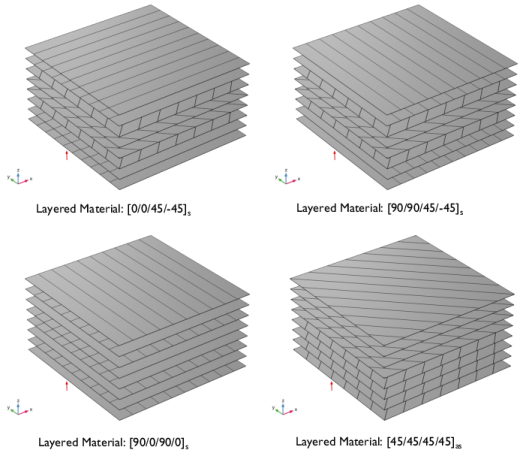
In the Settings window for Layered Material, type Layered Material: [90/90/45/-45]_s in the Label text field.
|
|
3
|
Find the Layer Definition section and change the rotation angles in the Rotation column as summarized in the table below.
|
|
4
|
Locate the Layer Definition section. Click Layer Stack Preview in the upper-right corner of the section.
|
|
1
|
|
2
|
In the Settings window for Layered Material, type Layered Material: [90/0/90/0]_s in the Label text field.
|
|
3
|
Find the Layer Definition section and change the rotation angles in the Rotation column as summarized in the table below.
|
|
4
|
Locate the Layer Definition section. Click Layer Stack Preview in the upper-right corner of the section.
|
|
1
|
|
2
|
In the Settings window for Layered Material, type Layered Material: [45/45/45/45]_as in the Label text field.
|
|
3
|
Find the Layer Definition section and change the rotation angles in the Rotation column as summarized in the table below.
|
|
4
|
Locate the Layer Definition section. Click Layer Stack Preview in the upper-right corner of the section.
|
|
1
|
|
2
|
|
3
|
|
4
|
|
5
|
Select the Transversely isotropic checkbox.
|
|
1
|
|
1
|
|
3
|
In the Settings window for Prescribed Displacement/Rotation, locate the Prescribed Displacement section.
|
|
4
|
|
5
|
|
6
|
|
1
|
|
3
|
|
4
|
|
5
|
|
1
|
|
2
|
|
3
|
|
4
|
|
5
|
Click
 Build All. Build All. |
|
1
|
|
2
|
|
3
|
Click
 Add. Add. |
|
4
|
|
1
|
|
2
|
|
3
|
|
4
|
|
5
|
|
6
|
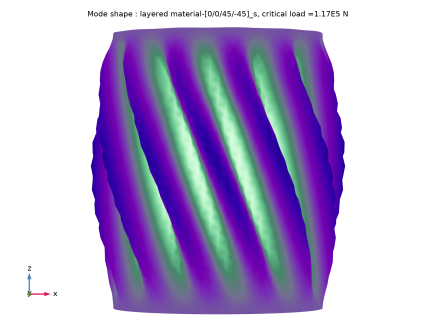
In the Title text area, type Mode shape : layered material-[0/0/45/-45]_s, critical load =eval(lambda) N.
|
|
7
|
Clear the Parameter indicator text field.
|
|
8
|
|
1
|
|
2
|
|
3
|
|
4
|
|
1
|
|
2
|
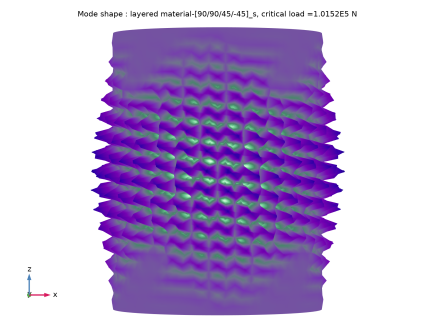
In the Settings window for 3D Plot Group, type Mode Shape: [90/90/45/-45]_s in the Label text field.
|
|
3
|
Locate the Data section. From the Material Switch 1 list, choose Layered Material: [90/90/45/-45]_s.
|
|
4
|
Locate the Title section. In the Title text area, type Mode shape : layered material-[90/90/45/-45]_s, critical load =eval(lambda) N.
|
|
1
|
|
2
|
|
3
|
|
4
|
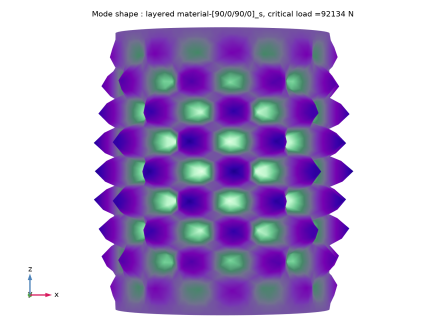
Locate the Title section. In the Title text area, type Mode shape : layered material-[90/0/90/0]_s, critical load =eval(lambda) N.
|
|
5
|
|
1
|
|
2
|
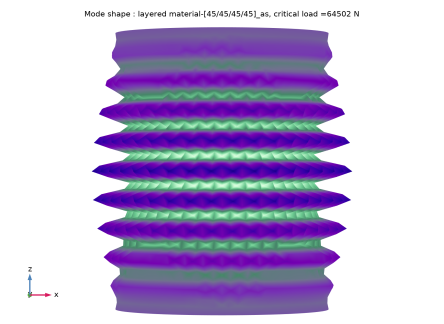
In the Settings window for 3D Plot Group, type Mode Shape: [45/45/45/45]_as in the Label text field.
|
|
3
|
Locate the Data section. From the Material Switch 1 list, choose Layered Material: [45/45/45/45]_as.
|
|
4
|
Locate the Title section. In the Title text area, type Mode shape : layered material-[45/45/45/45]_as, critical load =eval(lambda) N.
|
|
5
|
|
1
|
|
2
|
|
3
|
|
4
|
|
5
|
|
6
|
|
7
|
|
1
|
|
2
|
|
3
|
|
4
|
|
1
|
|
2
|
|
3
|
|
1
|
|
2
|
|
3
|
|
4
|
|
1
|
|
2
|
|
3
|
|
5
|
|
6
|
|
1
|
|
2
|
|
3
|
|
4
|
|
5
|
|
6
|
|
1
|
|
2
|
Go to the Result Templates window.
|
|
3
|
|
4
|
Click the Add Result Template button in the window toolbar.
|
|
5
|
|
1
|
|
2
|
|
3
|
|
1
|
|
2
|
|
4
|
|
5
|
|
6
|
|
7
|
Select the Reevaluate all evaluation groups after solving checkbox.
|


