|
1
|
|
1
|
|
2
|
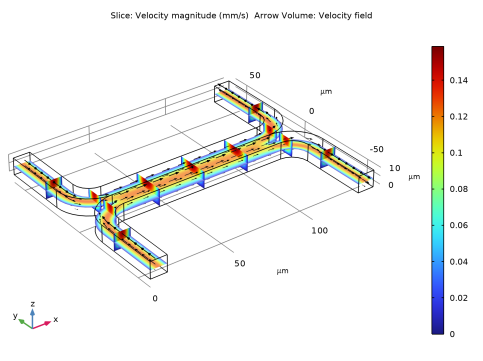
In the Settings window for 3D Plot Group, type Velocity (Coupled Flow) in the Label text field.
|
|
2
|
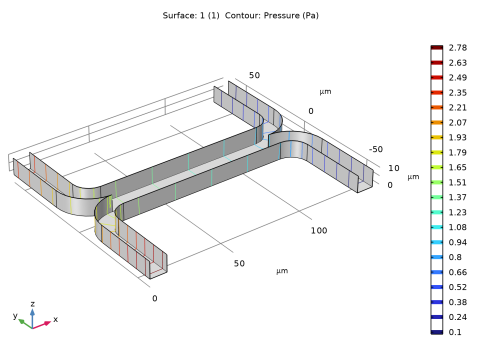
In the Settings window for 3D Plot Group, type Pressure (Coupled Flow) in the Label text field.
|
|
2
|
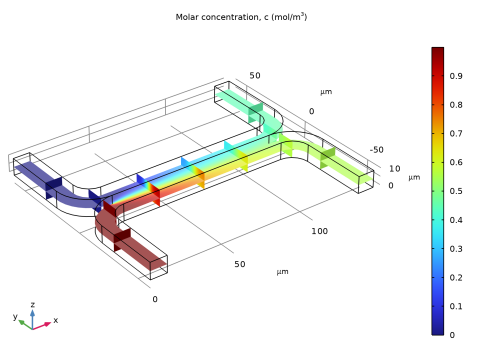
In the Settings window for 3D Plot Group, type Concentration (Coupled Flow) in the Label text field.
|
|
2
|
In the Settings window for 2D Plot Group, type Velocity Comparison in the Label text field.
|
|
-
|
From the Parameter value (D (m2/s)) list, choose 5e-11.
|
|
5
|
 and choose Duplicate
  .
. and choose Duplicate
  .
. .
. and choose Duplicate
  .
. .
. and choose Duplicate
  .
. .
. .
. and choose Duplicate
  .
. .
. and choose Contour
  .
.  , right click Contour 1
  and choose Duplicate
  .
. .
. in the Graphics toolbar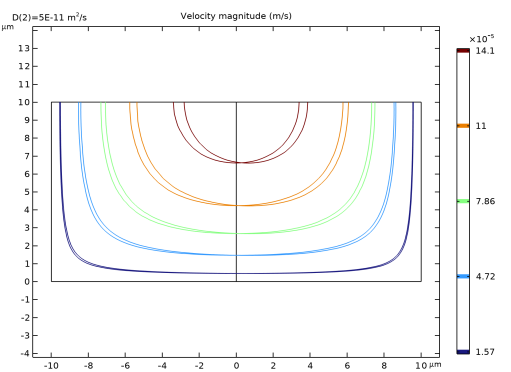
 Global Evaluation.
 in the upper–right corner of the Expressions section. From the menu, choose Component 1 (comp 1) > Transport of Diluted Species > Outflow 2 > tds.out2.c0_avg_c - Average concentration - mol/m
 .
.  and choose Duplicate
  .
. and choose Evaluate > New Table.