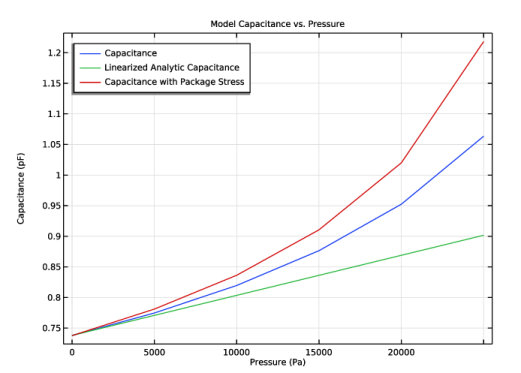
The packaging stress causes a significant change in the response of the device. At zero applied pressure the sensitivity of the COMSOL Multiphysics model has increased to 10×10
-6 pF/Pa (40
×10
-6 pF/Pa for the entire device). Compare to the unstressed value of 7.3e-6 pF/Pa (29
×10
-6 pF/Pa for the entire device). The effect is even more pronounced at a pressure of 20 kPa, where the model that includes thermal stresses shows a pressure sensitivity of 25
×10
-6 pF/Pa (100 pF/Pa for the entire device), compared to the unstressed pressure sensitivity of 14
×10
-6 pF/Pa (sensor output 57 pF/Pa).
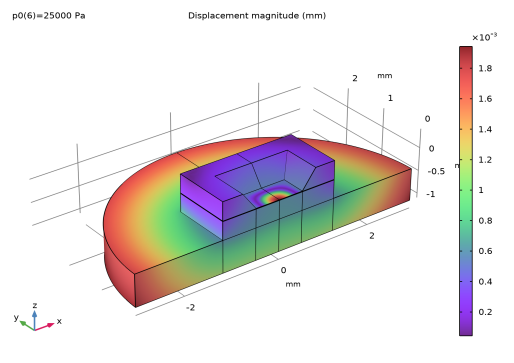
 and choose Mirror 3D
  .
. and choose Duplicate
  .
. .
. right-click Global 1
  and choose Duplicate
  .
. .
.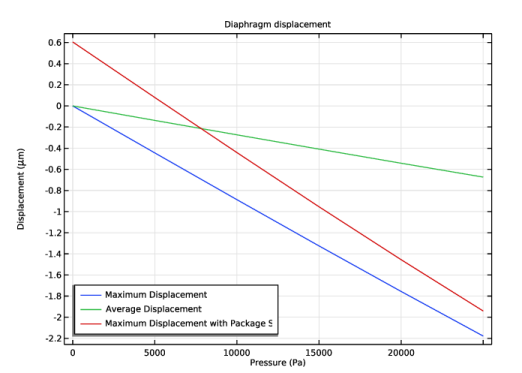
 . On the Model Capacitance vs Pressure toolbar click Global
  .
. in the upper-right corner of the y-Axis Data section. From the menu, navigate to Component 1 > Electrostatics > Terminals > es.C11 - Maxwell capacitance - F; then double click to select the item.
 .
.