You are viewing the documentation for an older COMSOL version. The latest version is
available here
.
Chemical Reaction Engineering Simulations
Simulations in chemical reaction engineering are often used during the investigation and development of a reaction process or system.
In the initial stages, they are used to dissect and understand the process or system. By setting up a model and studying the results from the simulations, engineers and scientists achieve the understanding and intuition required for further innovation.
Once a process is well understood, modeling and simulations are used to optimize and control the process’ variables and parameters. These “virtual” experiments are run to adapt the process to different operating conditions.
Another use for modeling is to simulate scenarios that may be difficult to investigate experimentally. One example of this is to improve safety, such as when an uncontrolled release of chemicals occurs during an accident. Simulations are used to develop protocols and procedures to prevent or contain the impact from these hypothetical accidents.
In all these cases, modeling and simulations provide value for money by reducing the need for a large number of experiments or to build prototypes, while, potentially, granting alternative and better insights into a process or design.
Modeling Strategy
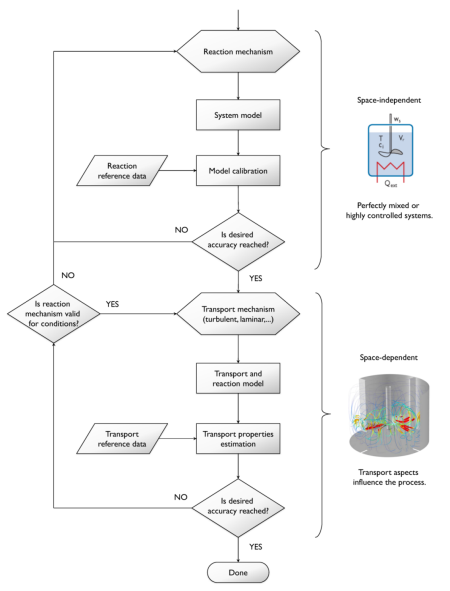
The flowchart in
Figure 1
describes a strategy for modeling and simulating chemical reaction processes and systems.
Figure 1:
Flowchart summarizing the strategy for modeling reacting systems or designing chemical reactors.
The strategy suggests first investigating a reacting system that is either space-independent, or where the space dependency is very well-defined.
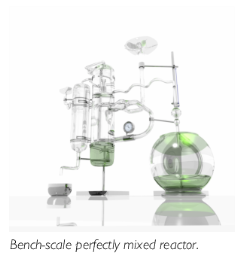
A system where space dependency is irrelevant is usually so well mixed that chemical species concentrations and temperature are uniform throughout and are only a function of time — this is often denoted as a perfectly mixed reactor. A plug flow reactor is a system where the space dependency is well defined.
Once the effects of space dependency are removed or well accounted for, both experimental and modeling investigations can concentrate on the reactions themselves, and the rate laws that control them.
The next step is to apply this information to the chemical reactors or systems that are of interest. These, of course, vary in length, width, and height, and are also subject to a range of external parameters including inflows, outflows, cooling, and heating. These are space (and time) dependent systems.
Investigating Chemical Reaction Kinetics — Modeling Perfectly Mixed and Plug Flow Reactors
An important component in chemical reaction engineering is the definition of the respective reaction rate laws, which result from informed assumptions or hypotheses about the chemical reaction mechanisms. Ideally, a reaction mechanism and its corresponding rate laws are found through conducting rigidly controlled experiments, where the influence of spatial and time variations are well known. Sometimes such experiments are difficult to run, and a search of the literature or using the rate laws from similar reactions provides the first hypothesis.
Perfectly mixed or ideal plug flow reactor models are the most effective reactor types for duplicating and modeling the exact conditions of a rigidly-controlled experimental study. These virtual experiments are used to study the influence of various kinetic parameters and other conditions on the behavior of the reacting system. Then, using parameter estimation, the reaction rate constants for the proposed reaction mechanisms can be found by comparing experimental and simulated results. The comparison of these results to other experimental studies enables the verification or further calibration of the proposed mechanism and its kinetic parameters.
Modeling a reaction system in a well-defined reactor environment also provides an understanding of the influence of various, yet specific, operating conditions on the process, such as temperature or pressure variations. The more knowledge that is gained about a reacting system or process, the easier it is to model and simulate more advanced descriptions of these systems and processes.
Investigating Reactors and Systems — Modeling Space Dependency
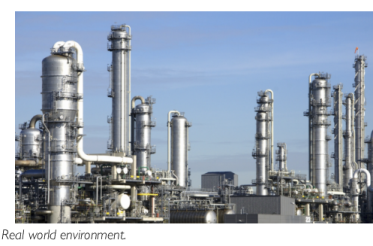
Once a reacting process or system’s mechanism and kinetic parameters are decided and fine-tuned, they can be used in more advanced studies of the system or process in real-world environments. Such studies invariably require full descriptions of the variations through both time and space to be considered, which, apart from the reaction kinetics, includes material transport, heat transfer, and fluid flow.
Depending on assumptions that can (or sometimes must) be made, these descriptions are done in either 1D, 2D, or 3D, where time dependency can also be considered if it is of importance.
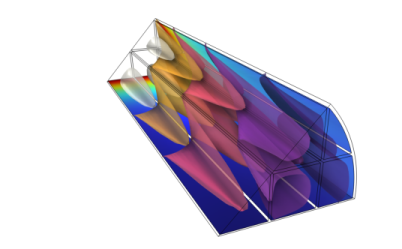
The temperature isosurfaces throughout a monolith reactor used in a catalytic converter. The surface plot shows the concentration profile of one of the reactants.
Once again, comparisons between simulation and results, from either the reactor or system itself, or a prototype of them, should always be done if possible. Models that involve material transport, heat transfer, and fluid flow often involve generic material parameters that are taken from the literature or from systems that may be slightly different, and these may need to be calibrated to improve the accuracy of the model.
When a model’s accuracy has been ascertained, then it becomes a model that can be used to simulate the real-world chemical reactor or process under a variety of different operating conditions. The understanding that results from these models, as well as the concrete results they provide, go toward developing or optimizing a chemical reactor with greater precision, or controlling a system with more confidence.